Who is Mato Celestin Medović?
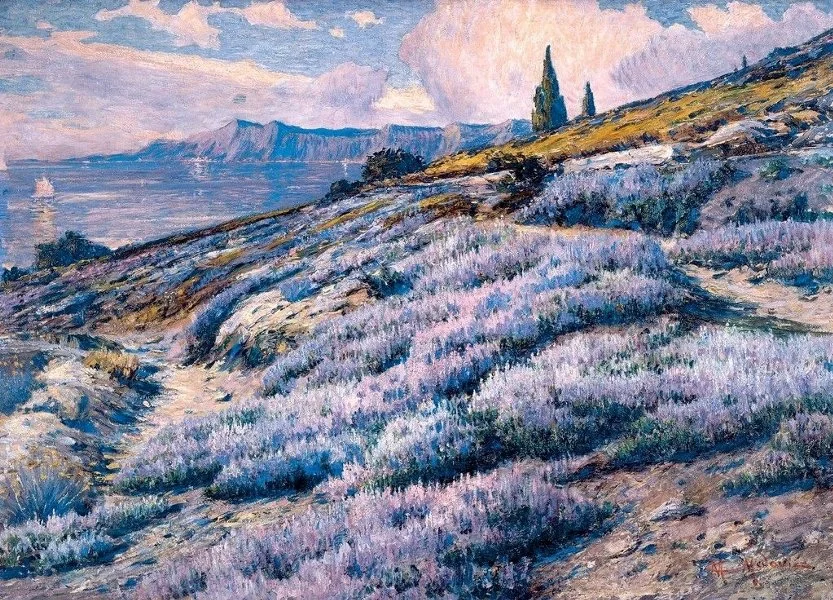
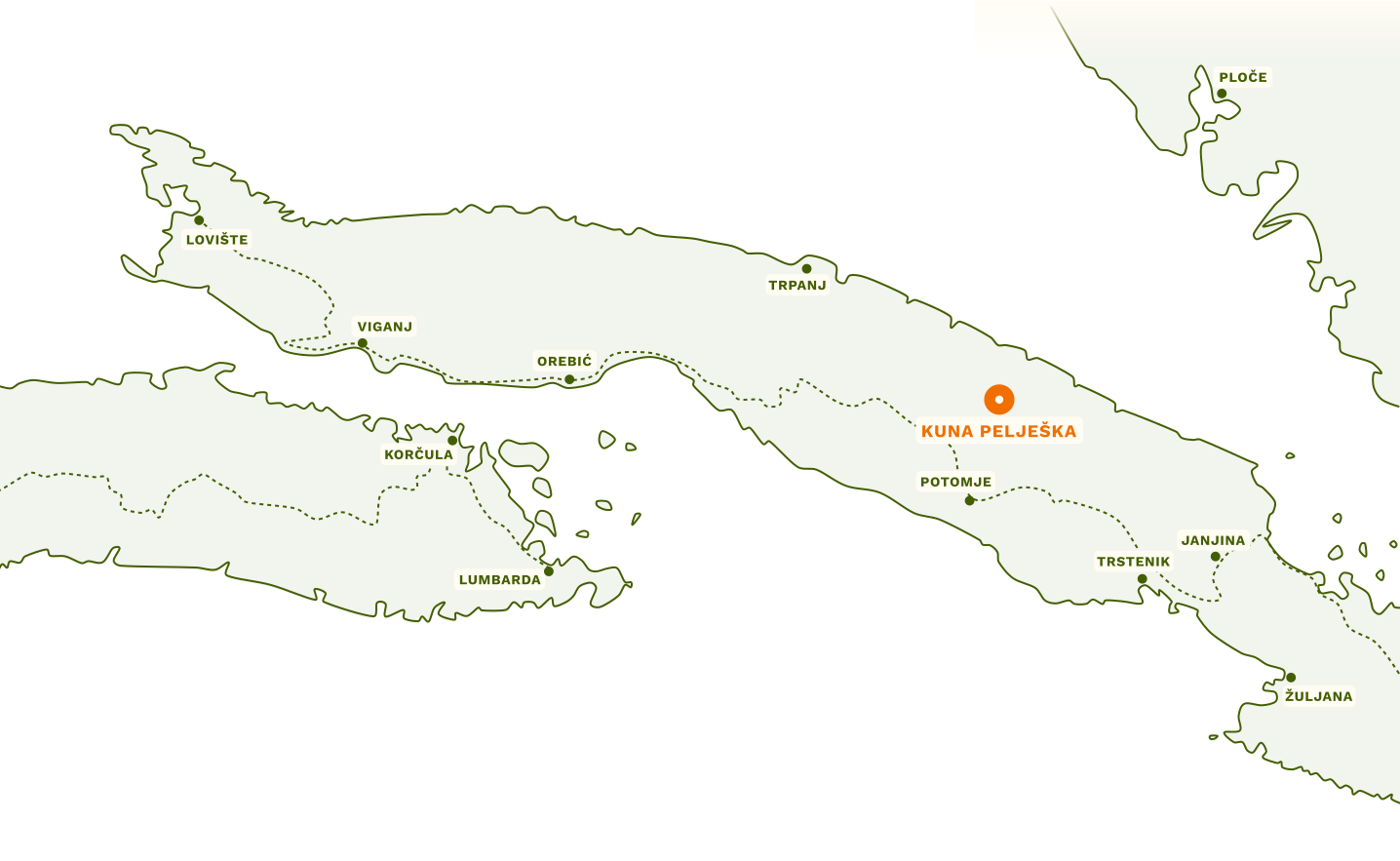
Mato Celestin Medović was one of the most important representatives of Croatian painting at the end of the 19th and beginning of the 20th century. Born in 1857 in Kuna on the Pelješac peninsula, he is remembered as the artist who uniquely captured the light and landscapes of southern Croatia on canvas.
His path to painting was far from ordinary. As a young man, he joined the Dominican order and took the name Celestin, under which he later became known in artistic circles. It was his monastic life that enabled him to pursue education and travel abroad. Medović began his artistic studies in Rome at the Accademia di San Luca, where he developed a strong sense for composition and light. He later continued his studies in Munich, then one of Europe’s leading artistic centres, where he encountered realism and stronger contrasts. This combination — Italian light and German structure — would shape his later work.
After returning to Croatia, Medović established himself as an important painter of sacred and historical subjects. His works can still be found in numerous churches, and he became part of the circle of artists, alongside figures such as Vlaho Bukovac, who helped shape the modern Croatian art scene at the end of the 19th century. Among his most famous works is the monumental composition “The Split Council of 925”, depicting a significant moment in Croatian history.
At the beginning of the 20th century, Medović returned to his native Kuna, where he increasingly devoted himself to landscape painting. It was during this period that some of his most recognizable works were created. He painted olive groves, vineyards, dry stone walls, and the landscapes of Pelješac, always with a particular focus on light. His later paintings reveal strong impressionist influences — freer brushstrokes, a brighter palette, and an emphasis on atmosphere.
Mato Celestin Medović passed away in 1920, but his work remains an important part of Croatian cultural heritage. Today, his landscapes of Pelješac are considered among the finest achievements of Croatian painting of that era. Kuna is often called “the village of vines and brushes,” as it has long been home to an exceptional number of artists, painters, and sculptors.
•
Follow us even when you're not here!

+385 98 9987 679
